Class Newsletter Guide: Templates, Examples, and Best Practices
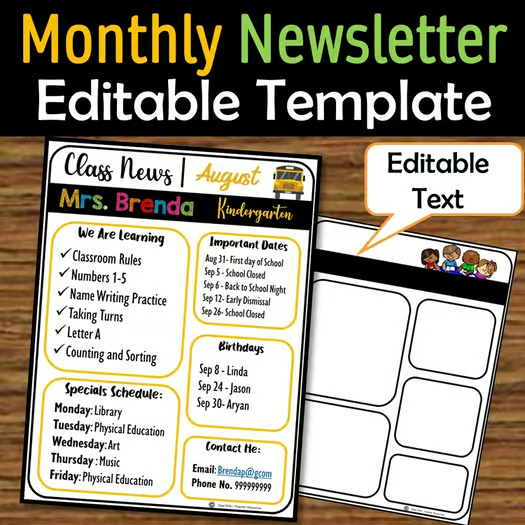
A well-written class newsletter keeps families informed, builds community, and documents what students are learning each week. Reviewing strong classroom newsletter examples before writing one reveals that the most effective versions are scannable, specific, and sent consistently. A good parent newsletter template organizes information into predictable sections so families know where to look for key updates. Seasonal editions, like a january newsletter template, often need different content than mid-year editions, since they communicate fresh-start goals and upcoming events. Teachers who also run a class blog can repurpose newsletter content digitally to reach families who prefer reading online.
What Every Class Newsletter Should Include
A class newsletter works best when it follows the same structure every time. Families should be able to open it and immediately locate upcoming dates, current learning units, and action items requiring a response. Classroom newsletter examples from experienced teachers typically include: a brief greeting, a curriculum summary by subject area, upcoming field trips or events, a volunteer request if applicable, and a closing note of appreciation. Keeping the total length to one page, front and back, or a single scrollable digital document increases readership. Newsletters longer than two pages lose most families after the first section.
Tone and Language in a Parent Newsletter Template
A parent newsletter template written in accessible, direct language communicates more effectively than one filled with educational jargon. Terms like “phonological awareness” or “number sense” should be briefly explained or replaced with plain-language descriptions. Parents who understand what their child is working on are more likely to support that work at home. The newsletter should avoid the passive voice where possible and use specific student activities rather than general statements. “Students wrote personal narratives this week about a favorite memory” is more informative than “writing skills are being developed.”
How a January Newsletter Template Differs from Other Months
A january newsletter template typically addresses the return from winter break, any new semester goals or curriculum changes, and upcoming standardized testing windows if applicable. The tone in a January edition often includes a fresh-start message acknowledging the new year while reestablishing classroom routines. A january newsletter template also benefits from reminders about supplies that may need replenishing after the break, such as tissues, pencils, or project materials. Seasonal newsletters build natural rhythm into family-school communication and give the newsletter calendar a sense of purpose beyond routine updates.
Classroom Newsletter Examples That Work Across Grade Levels
The best classroom newsletter examples are those adapted for the actual reading level and lifestyle of the families in a specific classroom. An elementary school newsletter uses shorter paragraphs and larger type than one written for high school families who can digest denser information. Classroom newsletter examples for dual-language classrooms often appear in two columns with parallel translations. For classrooms with high rates of digital access, embedding links to videos of student work or to the class blog creates richer engagement than static text alone. The format should serve the audience, not the teacher’s preference.
Using a Class Blog to Extend the Newsletter
A class blog extends the newsletter by providing a living archive of classroom activity that families can access at any time. Where the newsletter communicates the week’s highlights, a class blog documents projects, posts photos of student work, and allows parents to engage with the content through comments. Teachers who maintain both a newsletter and a blog create multiple touchpoints with families, which research consistently associates with stronger family engagement and better student outcomes. The blog also gives students an audience for their work beyond the classroom, which increases motivation and writing quality.
Key takeaways: A consistent class newsletter with a reliable structure keeps families engaged and informed throughout the year. Using a parent newsletter template reduces production time and improves readability, while seasonal templates like a january newsletter template give each edition a distinct purpose. Pairing the newsletter with a class blog extends reach and creates an ongoing record of student learning that families can revisit.