Pickled Daikon Radish: Japanese Recipes and Daikon Pickle Techniques
Pickled Daikon Radish: Japanese Recipes and Daikon Pickle Techniques
Pickled daikon radish appears across Japanese, Korean, and Southeast Asian cuisines in distinctly different preparations. Japanese pickled radish is among the most common forms – mild, crisp, and made with a simple rice vinegar brine. Pickled radish japanese preparations range from the bright yellow takuan to quick-pickled white slices served alongside grilled fish. A japanese pickled radish recipe requires only a few ingredients and produces results that keep well in the refrigerator for weeks. Making a daikon radish pickle at home takes about 15 minutes of active work, with the flavor developing over 24 to 48 hours.
The techniques below cover quick pickling, traditional tsukemono methods, and storage guidelines.
Basic Japanese Pickled Radish Recipe and Variations
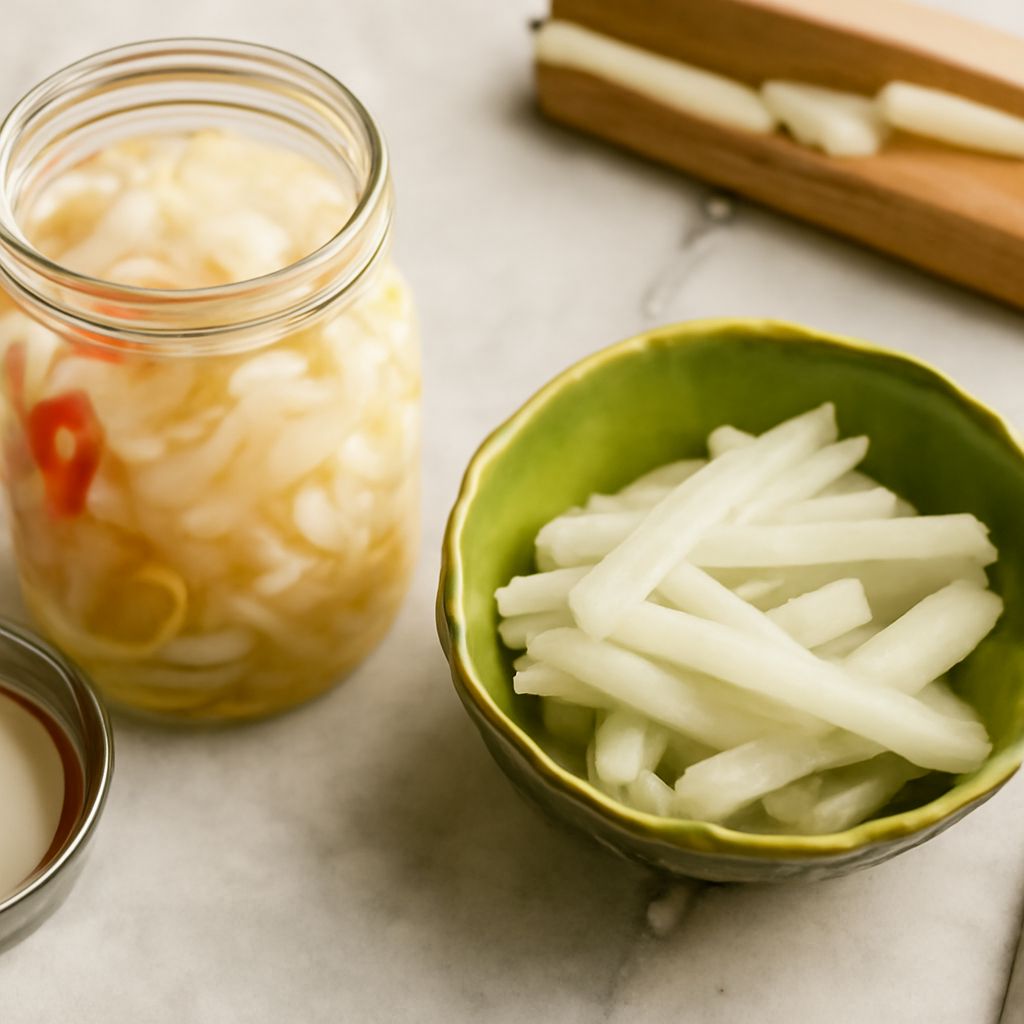
A standard japanese pickled radish recipe uses rice vinegar, sugar, and salt as the brine base. The ratio commonly used is 3 parts rice vinegar, 1 part sugar, and 1 teaspoon salt per cup of vinegar. Daikon is peeled, sliced or julienned, and packed into a clean jar before the hot brine is poured over. The jar is sealed and refrigerated once cooled.
This pickled daikon radish is ready to eat after 24 hours and reaches its best flavor around 48 hours. It keeps for up to two weeks refrigerated. The daikon softens slightly while retaining a pleasant crunch that makes it a good accompaniment to rice dishes, ramen, and banh mi sandwiches.
Variations in pickled radish japanese preparations include adding chili flakes for heat, thin slices of fresh ginger, or a small piece of kombu for umami depth. Turmeric added to the brine produces the characteristic yellow color of takuan without the longer fermentation process traditional preparations require.
Takuan is the traditional form of japanese pickled radish: whole daikon dried in the sun for several weeks, then fermented in rice bran (nuka) with salt, sugar, and optionally kombu and chili. This produces a strongly flavored, deeply yellow pickle with a firm but chewy texture. Home preparation of traditional takuan requires equipment and time that most kitchens cannot provide, making commercial versions the practical choice for most cooks.
A quick daikon radish pickle uses the same vinegar brine method as described above and suits weeknight preparation. Slice the daikon into thin rounds or half-moons for fast brine penetration. Thicker cuts produce a crispier pickle but require longer brine time – at least 48 hours before the flavor is fully developed.
Daikon contains compounds that some individuals find produce digestive gas. For people with sensitive digestion, starting with small portions of pickled daikon radish and increasing gradually is a sensible approach. Pickled preparations are generally better tolerated than raw daikon because the acid brine partially breaks down the fibrous tissue.
The japanese pickled radish recipe brine can be reused once for a second batch of daikon with slightly less intensity. After two uses, the brine should be discarded and replaced. Reused brine produces a more complex, less bright flavor profile that some cooks prefer for certain applications.
Store pickled daikon radish in glass rather than plastic containers. The acidity of the brine can absorb flavors from plastic over time. Keep the jar sealed between uses and ensure the daikon remains submerged under the brine to prevent surface exposure.