Point of View Example: Objective POV, Graphic Organizers, and Everyday Use
Point of View Example: Objective POV, Graphic Organizers, and Everyday Use
A well-chosen point of view example makes abstract narrative concepts concrete for students and writers at every level. Understanding the full range of examples of point of view — from first person to objective — clarifies how narrator choice shapes everything the reader experiences. A point of view graphic organizer helps students categorize and compare different perspectives in texts they read, building a transferable skill.
This guide covers objective point of view examples from literature, explains the short story “Everyday Use” as a case study in first-person narration, and provides point of view questions alongside point of view task cards ideas for classroom use.
Point of View Example: The Main Types
The most useful point of view example set covers the four primary modes: first person (the narrator is a character using “I”), second person (rare in fiction, but direct address using “you”), third person limited (a narrator outside the story who follows one character’s perspective), and third person omniscient (a narrator with access to all characters’ thoughts). Each produces a distinct reader experience that the writer selects deliberately.
A point of view example that shows the difference most clearly: the same scene narrated in first person feels intimate and subjective; the same scene in objective third person feels like surveillance footage — action is visible, inner life is not.
Examples of Point of View in Published Fiction
Classic examples of point of view illustrate how deeply the choice shapes a story’s effect. The Great Gatsby uses first-person narration through Nick Carraway, who is simultaneously a participant and an observer — his reliability is questionable, which is essential to the novel’s meaning. Hills Like White Elephants uses objective third person, showing only what could be seen and heard, leaving the reader to infer everything else. Both are definitive examples of point of view used with complete control.
Point of View Graphic Organizer Uses in the Classroom
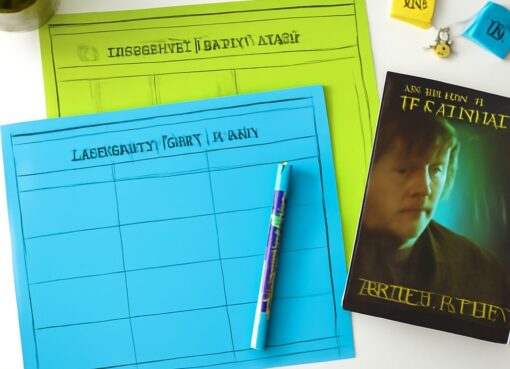
A point of view graphic organizer gives students a structured way to compare narrator types across multiple texts. A typical design includes columns for the narrative mode, the information available to the reader, and the emotional effect of that limitation or access. When students fill in these columns for three or four texts, the patterns become visible without requiring explicit instruction.
The most effective point of view graphic organizer designs ask students to predict how the story would change if told from a different perspective — that counterfactual thinking deepens understanding more than identification alone.
Objective Point of View Examples
Objective point of view examples are the hardest for students to find because the technique is less common in mainstream fiction. Hemingway’s early stories — particularly “Hills Like White Elephants” and “A Clean, Well-Lighted Place” — are the canonical objective point of view examples in American literature. The camera-eye approach removes all access to characters’ thoughts, which forces every emotion to be conveyed through action, dialogue, and implication.
Everyday Use Point of View and Teaching Questions
Alice Walker’s “Everyday Use” is taught frequently because its first-person narrator is unreliable in ways that require careful reading to identify. The everyday use point of view analysis asks students to consider what Mama (the narrator) cannot or will not see about her own family dynamics, which introduces the concept of narrative bias in an accessible context.
Key takeaways: Point of view is never a neutral technical choice — it determines what the reader can know, feel, and infer. A good point of view graphic organizer and targeted point of view questions make this visible through direct comparison across texts.