What Is Cyberpunk: Genre Origins, Themes, and Best Reads

Readers who ask what is cyberpunk are usually looking for a genre that takes technology seriously as a social force rather than a neutral tool. The answer involves high technology paired with social decay, corporate dominance, and protagonists who operate in the margins of a world they did not choose. The best cyberpunk books translate that premise into gripping narratives that feel both speculative and uncomfortably plausible. Best cyberpunk novels have shaped how millions of readers think about surveillance, identity, and digital culture. The cyberpunk authors who built the genre did so with prose as sharp as the world they depicted. Cyberpunk fiction continues to evolve, but its original concerns remain disturbingly current.
Defining What Is Cyberpunk as a Literary Genre
Understanding what is cyberpunk requires situating it within the broader science fiction tradition. The genre emerged in the early 1980s as a deliberate break from the optimistic techno-futures that had dominated science fiction for decades. Cyberpunk replaced orbital colonies and benevolent AIs with street-level grime, corporate warfare, and body modification. The genre asks what happens when powerful technology arrives unevenly, concentrating in the hands of corporations and criminal networks while ordinary people navigate a world that no longer serves them. That question is the engine of nearly every cyberpunk narrative.
Best Cyberpunk Books That Shaped the Genre
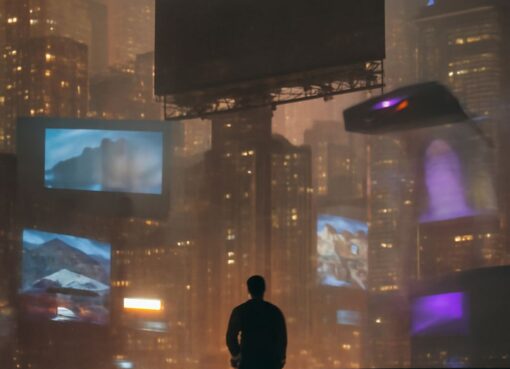
The list of best cyberpunk books almost always begins with William Gibson’s Neuromancer (1984), which introduced the word “cyberspace” and established the genre’s visual language: rain-slick megacity streets, corporate arcologies, and hackers jacking into data networks. Philip K. Dick’s Do Androids Dream of Electric Sheep?, published in 1968, predates the genre label but contains its essential DNA. Among the best cyberpunk books published since, Neal Stephenson’s Snow Crash and Richard K. Morgan’s Altered Carbon expanded the genre’s thematic range while keeping its street-level intensity intact.
How Best Cyberpunk Novels Differ by Decade
The best cyberpunk novels of the 1980s focus on hardware and network access as the primary axes of power. Those from the 1990s shift toward virtual reality and corporate culture. Twenty-first-century best cyberpunk novels tend to emphasize biohacking, algorithmic control, and the erosion of privacy in ways that require less speculative distance from the present. Each decade’s output reflects the technology anxieties most legible to readers at the time, which is why the genre reads differently depending on when a particular book was written and when it is being read.
Cyberpunk Authors Who Defined the Movement
Cyberpunk authors who shaped the genre’s first wave include William Gibson, Bruce Sterling, Pat Cadigan, and Rudy Rucker. Sterling’s Mirrorshades anthology (1986) collected early short fiction that defined the movement’s aesthetic commitments. Pat Cadigan, often called the “Queen of Cyberpunk,” brought interior psychological depth to a genre that sometimes prioritized spectacle over character. Among later cyberpunk authors, Nnedi Ofofor, Lavie Tidhar, and Annalee Newitz have brought new perspectives to the tradition, expanding its demographic and geographic range beyond the Anglo-American settings that dominated its founding texts.
Core Themes in Cyberpunk Fiction
Cyberpunk fiction returns consistently to a small set of concerns: the body as technology, the corporation as sovereign power, the city as ecosystem, and identity as construct. The body in cyberpunk fiction is rarely stable; characters modify, augment, or rent out their physical selves in ways that blur the boundary between human and machine. Corporate power in these narratives operates above and outside legal frameworks, making the state largely irrelevant. The megacity is both setting and character, a dense environment where social class, technology access, and survival chance intersect at every intersection.
What Is Cyberpunk Today: New Voices and Evolving Themes
Contemporary writers engaging with what is cyberpunk in the present moment confront the problem that the genre’s imagined futures have partially arrived. Surveillance capitalism, algorithmic decision-making, and the concentration of digital infrastructure in a handful of corporate platforms all resemble cyberpunk scenarios more than they resemble the optimistic tech futures that the genre originally opposed. New cyberpunk fiction responds by going further into the body, deeper into non-Western settings, and more explicitly into the political mechanisms that produce inequality. The genre remains relevant precisely because the question it asks, who benefits when powerful technology arrives unevenly, has not been answered.