Author’s Point of View: First Person Examples in Writing and Photography
The author’s point of view shapes everything a reader experiences — what they know, what they feel, and what they are allowed to perceive. First person narration is the most intimate mode, putting the narrator’s voice and perspective at the center. A clear first person point of view example shows this immediately: “I walked into the room and saw nothing had changed” tells the reader they are inside one consciousness looking outward.
This guide provides multiple first person point of view examples, examines point of view in photography as a visual analog, and compiles practical 1st person point of view examples for writers at different skill levels.
Author’s Point of View: Choosing the Right Mode
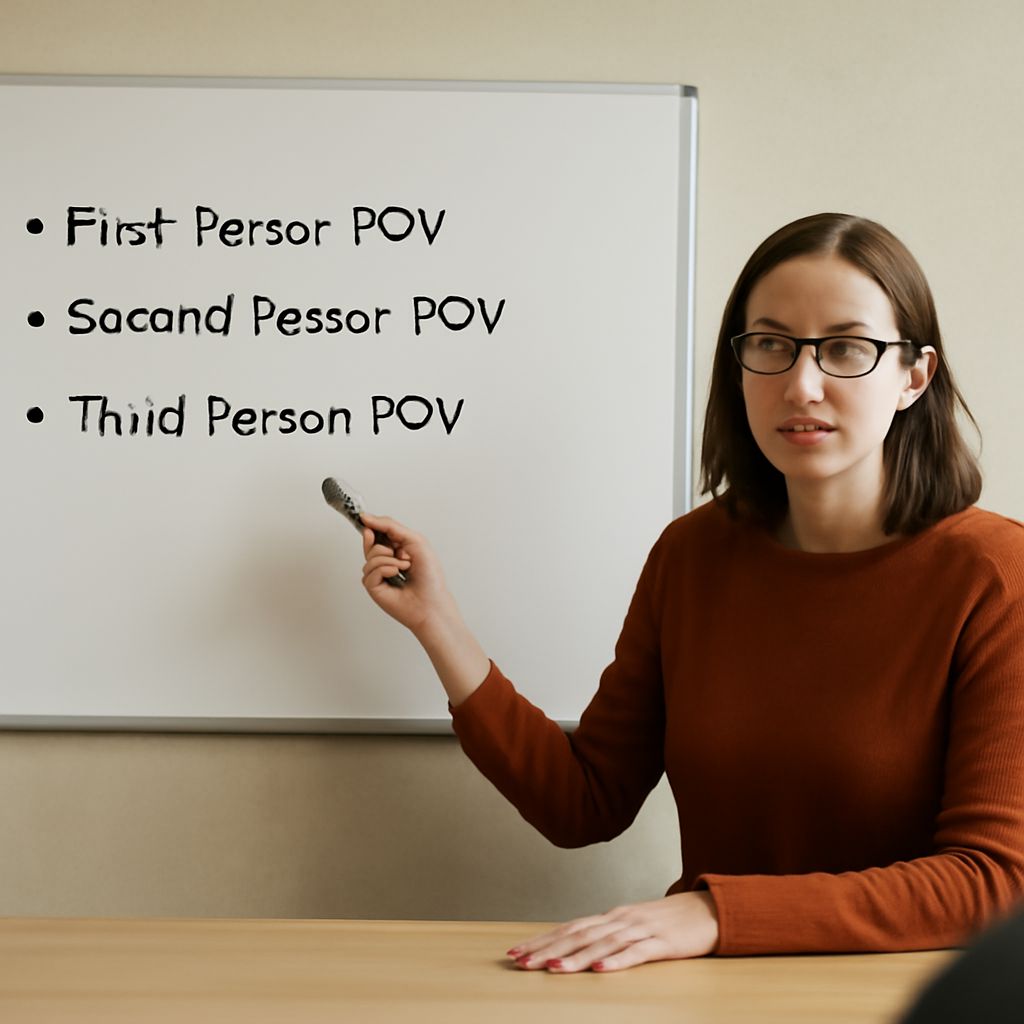
The author’s point of view decision is one of the most consequential made during story planning. First person creates intimacy and reliability — or unreliability, which is its own powerful tool. Third person limited maintains proximity to one character while allowing slightly more narrative distance. Third person omniscient opens the entire story world.
Writers who default to first person without considering alternatives often miss the narrative possibilities of other modes. The decision should be driven by what the story requires, not habit.
First Person Point of View Example in Literature
Classic and Contemporary Uses
A canonical first person point of view example is the opening of The Catcher in the Rye: Holden Caulfield’s voice is so distinctly present that the reader immediately understands the entire novel will be filtered through his particular — and unreliable — perception. Another first person point of view example from contemporary fiction: Elena Ferrante’s Neapolitan novels, where Elena Greco’s first-person narration gives the decades-long story its emotional intensity.
In both cases, the first person voice is not simply a technical choice — it is the story. Remove the specific narrator and the story collapses into something much less particular.
First Person Point of View Examples for Writers
First person point of view examples from a craft perspective illustrate both the advantages and constraints of the mode. Advantages: immediate emotional access, authentic voice, natural tension from the narrator’s limited knowledge. Constraints: the narrator must logically be present at or informed about every scene, which restricts plot options.
Writers can expand first person’s range through techniques like epistolary format (letters, diary entries) or by making the narrator a witness rather than a participant — placing them at the margins of events they are narrating.
Point of View in Photography: A Visual Parallel
Point of view in photography works differently but shares conceptual ground with narrative POV. A photographer’s physical position — high, low, close, far — determines what the viewer sees and how they relate to the subject. A low-angle shot looking up at a subject creates a sense of power or menace. Eye-level shots feel neutral. This is point of view in photography as a deliberate compositional choice, not an accident.
Writers who study point of view in photography often find it clarifies their thinking about narrative perspective — both disciplines ask the same fundamental question: from where, and through whose perception, is this moment being conveyed?
1st Person Point of View Examples Across Genres
1st person point of view examples appear across genres with very different effects. In crime fiction, the first-person detective (Marlowe, Poirot’s Watson) creates a sense of discovery in real time. In memoir, first person is the default mode — the narrator is the subject. In literary fiction, first person often signals an unreliable narrator whose limitations are part of the story’s meaning.
Comparing 1st person point of view examples across genres shows how the same technical choice produces radically different reader experiences depending on tone, subject matter, and narrative intent.