Proofreading Symbols and Marks: Chart, Resume Tips, and Basic Reference
Proofreading symbols are the standardized notations editors and proofreaders use to mark changes on printed manuscripts and documents. A proofreading marks chart provides a quick reference for both editors and authors receiving marked-up text. Resume proofreading applies these and related techniques to the high-stakes task of preparing application documents. Online platforms like proofreading anywhere have made freelance proofreading careers more accessible. Basic proofreading marks are the subset most relevant for general editing work outside traditional print publishing environments.
The sections below cover standard marks, resume-specific technique, and career context for those considering professional proofreading work.
Standard Proofreading Symbols and Their Meanings
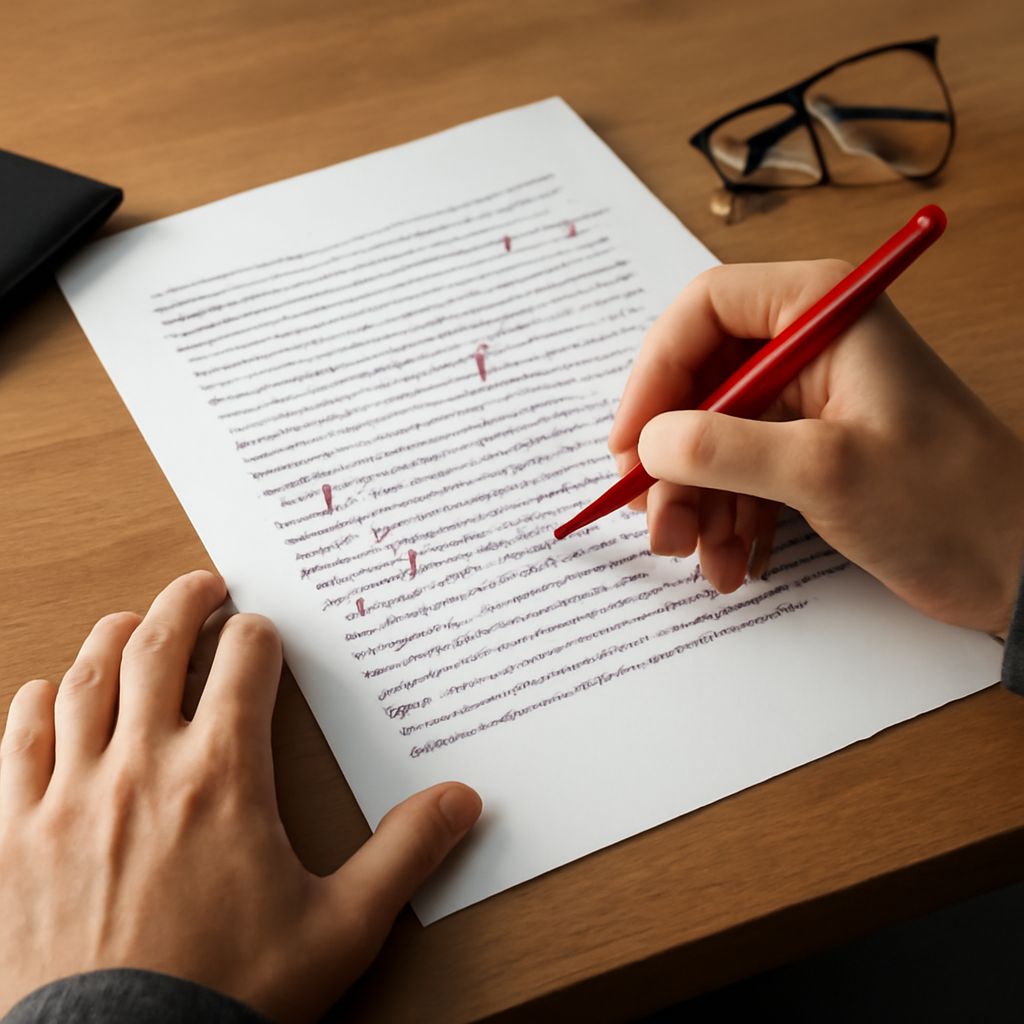
Proofreading symbols originate from traditional print production, where marked manuscripts moved between typesetters and editors. The most frequently used marks include: stet (let it stand), dele (delete), tr (transpose), lc (lowercase), caps (capitalize), sp (spell out), and the paragraph symbol to indicate a new paragraph. A proofreading marks chart typically organizes these by function: insertion, deletion, spacing, capitalization, and formatting.
Digital proofreading has largely shifted from hand-marked symbols to tracked changes in word processors, but proofreading symbols remain relevant in print production, academic editing, and workflows where documents circulate in PDF form with annotation tools.
Using a Proofreading Marks Chart Efficiently
A proofreading marks chart is most useful when kept visible during active editing. Physical reference cards, printed from publishing style guides, allow faster lookup than searching online. For editors who work primarily in digital environments, the equivalent is a personal reference sheet of keyboard shortcuts for tracked changes combined with a list of common error types to watch for systematically.
Resume Proofreading: A High-Stakes Application
Resume proofreading requires attention to categories of error that general document proofreading sometimes misses: inconsistent date formats, mismatched bullet styles, incorrect company names, and claims that are unverifiable or potentially misleading. A resume proofreader should also check alignment, spacing, and font consistency across the document.
The most common errors caught in resume proofreading are tense inconsistency (mixing past and present tense descriptions for the same role), hyphenation of compound modifiers, and incorrect use of semicolons in lists. Reading the resume aloud catches rhythm problems that silent reading misses.
Proofreading Anywhere: Freelance Career Overview
Proofreading anywhere refers to the freelance model where proofreaders work remotely for clients across industries. The platform Proofread Anywhere offers training and community resources for those building this career. Core qualifications include strong command of grammar and style conventions, familiarity with at least one major style guide (Chicago, AP, APA), and reliable attention to detail over sustained editing sessions.
Freelance proofreaders typically find work through direct client relationships, job boards, and content agencies. Basic proofreading marks knowledge remains relevant for clients who deliver documents in formats requiring annotation rather than tracked changes.
Basic Proofreading Marks for General Editing Work
Basic proofreading marks for non-specialist editing work include a smaller set than full print production notation. The most practical subset: caret (insertion mark), strikethrough or dele (deletion), tr (transpose adjacent elements), circle around an abbreviation to indicate spelling out, and the paragraph symbol. These basic proofreading marks handle the majority of common corrections without requiring knowledge of the full traditional symbol set.
Writers who receive marked manuscripts benefit from keeping a proofreading marks chart nearby. Understanding what an editor has indicated prevents errors in transferring corrections to the digital file.