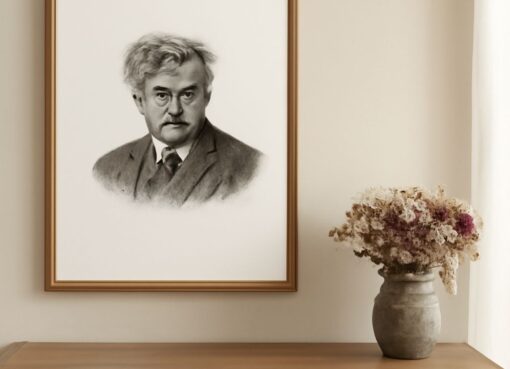
Martin Luther Quotes: The History Behind His Words
Did Martin Luther really say the words on that quotation card? This quotation attributed to the reformer needs a source and a translation; other sayings by Martin Luther deserve the same care. Start by identifying the work, its date, and the English version before drawing a lesson from a single line.
The passages below come from the sixteenth-century reformer Martin Luther, not Martin Luther King Jr., the twentieth-century American civil rights leader. They belong to sermons, teaching, and arguments about Christian belief in a particular historical setting. A quotation from the reformer is easier to understand when returned to that setting.
Martin Luther Quote on Repentance
In the first of his Ninety-Five Theses (1517), Luther argues that the whole life of believers should be repentance. In Howard Jones’s English translation, published by Oxford’s Taylor Editions, he writes that Christ “meant the whole life of the faithful to be penance.” Luther is the authorial speaker, framing a proposition for theological dispute.
The surrounding theses question how penance and indulgences were understood and preached. The second thesis distinguishes the lifelong condition in the first from sacramental penance administered by priests. This statement by Martin Luther is more than a general invitation to regret mistakes: it begins an argument about religious practice and authority.
Different translations of this quotation by Luther make a real difference here. Jones uses “penance”; another English version uses “repentance.” The notes to the Oxford edition discuss the language behind the choice. If you quote the sentence, cite the version you used rather than joining phrases from two translations.
Martin Luther quotes Scripture at the beginning of the thesis before stating his interpretation. The biblical command and Luther’s argument about it are related, but they are not the same speaker’s words. That distinction matters when a short quotation is presented without its opening.
Freedom and Service in One Sentence
In On the Freedom of a Christian (1520), Luther presents Christian freedom alongside service to others. The Hanover College excerpt reproduces an English rendering in which a Christian is “the most free lord of all” and also “the most dutiful servant of all.” The excerpt identifies the work and date but does not identify its translator; cite this online edition if using its wording.
A Martin Luther quote about freedom means more when its two claims are read together. In the treatise, Luther connects freedom with faith rather than the earning of righteousness through works, then discusses service to one’s neighbor. The paradox does not mean that every social obligation disappears. It expresses a theological claim about faith and a Christian’s conduct toward others.
Some Martin Luther quotes sound like broad declarations of individual independence. This passage from Martin Luther makes a narrower argument within Christian theology. Reading the paired clauses and the paragraphs after them shows why a quotation consisting only of the first half can mislead.
A Short Lesson for a Household
Luther’s Small Catechism (1529) was written as a concise guide to Christian teaching. In Robert E. Smith’s English translation, distributed by Project Gutenberg, Luther’s explanation of the first commandment says: “We must fear, love, and trust God more than anything else.” The commandment itself is biblical; the quoted explanation is Luther’s teaching voice.
This statement by the reformer appears in a question-and-answer sequence about the Ten Commandments. Subsequent explanations repeat “fear and love” while applying those ideas to conduct. These words of Martin Luther are designed for instruction, not as a complete account of Luther’s thought. The Evangelical Church in Germany also describes the catechism as a basic exposition for laypeople.
The different English forms of this line illustrate why quotes from Martin Luther should be tied to a translation. Another edition may say “above all things” where Smith writes “more than anything else.” Both convey a similar point, but a direct quotation should preserve the wording of the edition cited.
An Apple Tree and an Uncertain Attribution
A popular saying attributed to Martin Luther claims that he would plant an apple tree even if the world were ending the next day. The thought is memorable, but its attribution is not established by a contemporary Luther text. The Lutherhaus Eisenach traces a documented use of the saying as a reputed Luther quotation to a 1944 letter by pastor Karl Lotz. That evidence is centuries later than the reformer.
Treat this alleged quotation from Luther as a disputed attribution, not a verified statement from Luther. Repetition in a collection does not establish that he wrote it, and a source that calls it “a Luther saying” does not necessarily supply an original work.
How to Check the Next Passage
When you encounter Martin Luther quotes, find the title and passage before sharing them. Then check who is speaking, the date of the original, and the translator or edition responsible for the English words. A sentence in a catechism answers a different question from a thesis written for debate.
Finally, compare the quotation with its immediate neighbors. If a source gives neither a work nor a translation, look for an edition that does. Preserve its wording and cite it; if the trail ends at a modern quotation list, label the attribution uncertain.