Classic Chinese Novels: Four Worlds to Explore
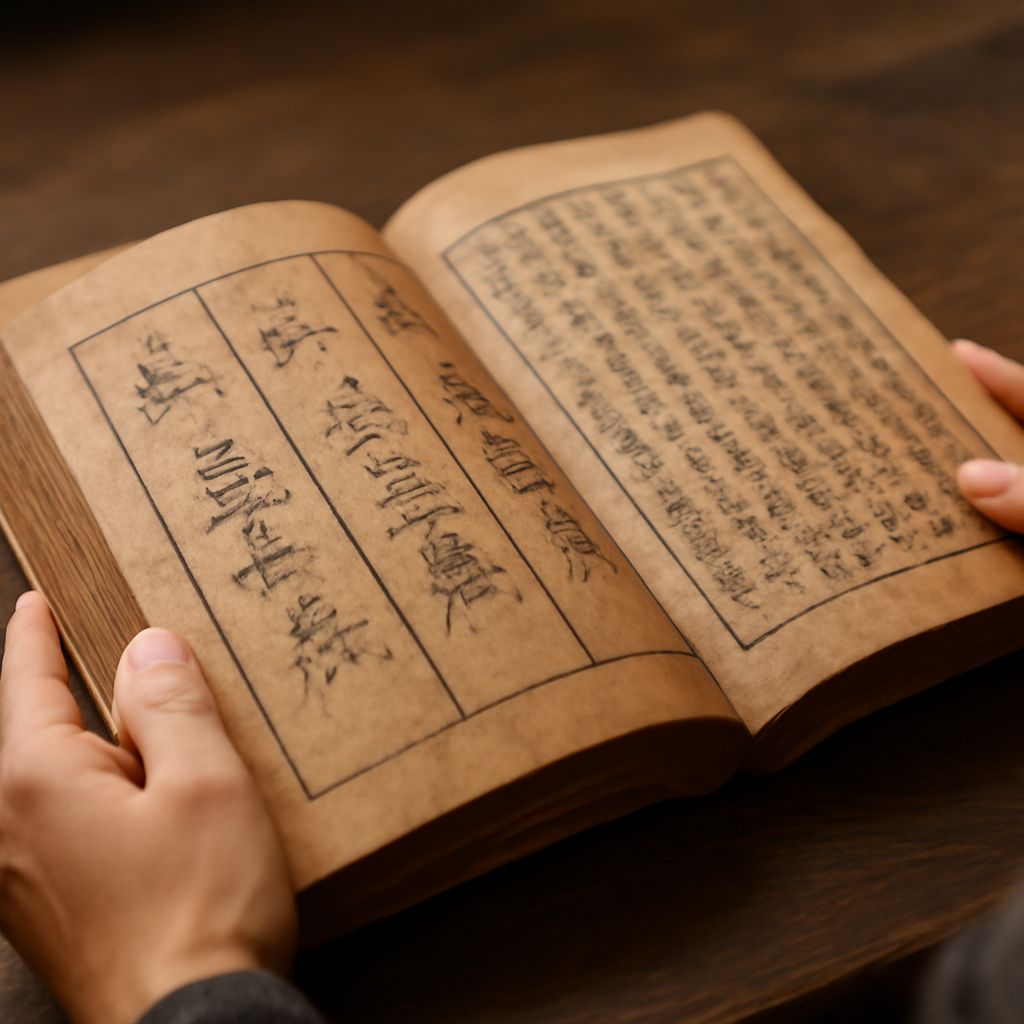
Begin with the world that appeals to you: a battlefield, an outlaw camp, a magical pilgrimage, or a great household. These enduring Chinese novels offer four very different entrances into the past. Together, this celebrated group of four works of Chinese literature ranges from public struggle to intimate family life.
Four Great Classical Novels of Chinese Literature: A Guide
The four great classical novels of Chinese literature are Romance of the Three Kingdoms, Water Margin, Journey to the West, and Dream of the Red Chamber. The first three took shape under the Ming dynasty; the last belongs to the Qing. Their settings reach across earlier centuries and imagined realms, so the date of a story is not necessarily the date of its composition.
These 4 Chinese classics share a large scale, but their pleasures differ. One follows rival powers; another gathers fugitives. A third sends a monk and his unruly companions toward India, while the fourth stays close to a family’s rooms and gardens. Each rewards attention to a large cast, though none requires you to memorize everyone at once.
Romance of the Three Kingdoms
Attributed to Luo Guanzhong, this Ming-era historical novel turns the fall of the Han dynasty and the rise of rival kingdoms into a vast story of alliances, battles, and contested loyalty. Its setting begins in the late second century, long before Luo’s lifetime. Generals and advisers compete through calculation as well as force; the drama often lies in the choice of a trusted ally.
The standard full text has 120 chapters, making this a substantial commitment. For an English edition, Moss Roberts’s complete translation includes maps and explanatory material. His abridged version is also available, as is Martin Palmer’s abridgment. Check the edition before you begin: a shorter version can be a welcome introduction, but it necessarily omits parts of the longer narrative.
Water Margin
Also known as Outlaws of the Marsh or The Marshes of Mount Liang, this Ming-era novel is traditionally attributed to Shi Nai’an, sometimes with Luo Guanzhong associated with its authorship or editing. Its stories grew through a long process of retelling. Set in Song-dynasty China, it follows men driven toward an outlaw stronghold by injustice, violence, and their own choices. The tone shifts between earthy comedy, fellowship, and brutality.
The text exists in versions of different lengths. John and Alex Dent-Young’s The Marshes of Mount Liang translates the 120-chapter version across five volumes; the first contains 22 chapters. You can sample it as a sequence of individual adventures before deciding whether to follow the band through the whole work.
Journey to the West
This sixteenth-century novel is traditionally attributed to Wu Cheng’en, though its authorship is debated. Drawing on the pilgrimage of the Tang monk Xuanzang and centuries of stories, it sends a scripture-seeking monk west with supernatural companions, including the irrepressible Monkey. Demons, transformations, jokes, and religious ideas meet along the road. Episodes often begin with a fresh obstacle, giving the long journey a lively rhythm.
The familiar version runs to 100 chapters. Anthony C. Yu’s revised translation presents the full work in four volumes, with notes and an introduction. His The Monkey and the Monk is an abridgment for a shorter visit. Among these four Chinese classics, this one may be the easiest to enter in episodes, though its verse and religious allusions gain depth from the notes.
Dream of the Red Chamber
Also called The Story of the Stone, Cao Xueqin’s eighteenth-century Qing novel follows the fortunes of the Jia household, particularly the young Bao-yu and his cousins Dai-yu and Bao-chai. Family ceremony, poetry, affection, and social pressure fill its carefully observed domestic world. A conversation or a gift can reveal as much about rank and feeling as a battle does in Three Kingdoms.
The novel circulated in manuscript before later printed editions. Cao left an unfinished work; the familiar 120-chapter form includes a later continuation associated with Gao E, whose precise role remains debated. Penguin’s five-volume The Story of the Stone, translated by David Hawkes and John Minford, offers that extended narrative. It is a long, detailed read, well suited to a reader who enjoys following relationships as they change.
Choosing an English Edition
Translations of these classic Chinese novels vary in tone, notes, spelling of names, and completeness. A translation may use familiar older spellings while another uses modern pinyin. Both can represent the same character. Keep the edition’s list of names nearby, and let repeated encounters establish who matters.
The four celebrated novels of China’s literary tradition also have complicated textual histories. A publisher’s label such as “complete” refers to the version translated; it does not mean every surviving version has the same chapters. Look at the introduction and contents, especially for Water Margin and The Story of the Stone. Notes can explain a poem, official title, or religious reference without requiring you to stop at every page.
To choose among the four great Chinese novels, start with the setting and pace you want. Pick Three Kingdoms for strategy, Water Margin for outlaw exploits, Journey for fantasy, or Stone for family life. Then compare a few pages of two English translations of your choice: listen to the dialogue, look at the notes, and choose the voice that makes you want to turn the page. These four works of Chinese fiction can wait for you in any order.